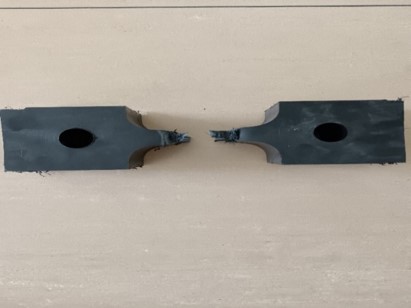


Tensile properties
Purpose: Determination of fundamental mechanical properties under uniaxial loading.
Standards:
Rubber, vulcanized or thermoplastic
ASTM D412, ISO 37, PSA D41 1099, KES B-L006
Plastics
ASTM D638, ISO 527-1 & 2 & 3 & 4 & 5, ISO 6259-1 & 2 & 3, ASTM D6693, ISO 13953, ASTM D4595, ASTM D4894, ASTM D4632, ASTM D3039, ASTM D882
Measured Properties
- Yield tensile strength (YS)
- Ultimate tensile strength (UTS)
- Elongation
- Elastic modulus
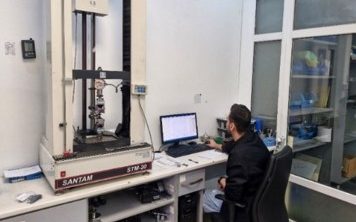
Charpy & IZOD Impact Test
Purpose: Evaluation of the toughness and resistance of materials.
Standards:
ASTM D6110, ISO 179-1, ASTM D256, ISO 180
Capabilities
- Ambient temperature testing
- Cryogenic testing down to −40 °C
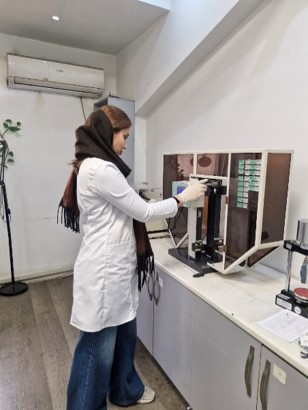
Flexural Properties
Purpose: The method is used to investigate the flexural behavior of the test specimens and to determine the flexural strength, flexural modulus and other aspects of the flexural stress/strain relationship under the conditions defined. It applies to a freely supported beam, loaded at midspan (three-point loading test)
Standards:
ASTM D790, ISO 178, ASTM C651
Measured Properties
- Flexural strength
- Flexural modulus
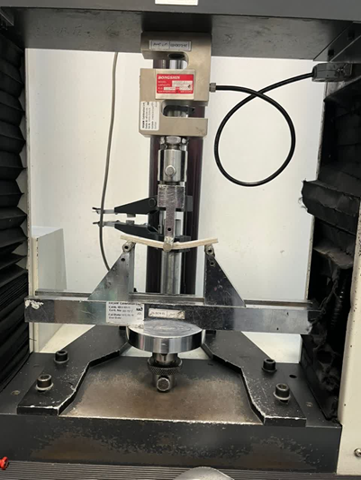
Plastics & Rubber, vulcanized or thermoplastic – Determination of compressive properties
Purpose: The method is used to investigate the compressive behavior of the test specimens and for determining the compressive strength, compressive modulus and other aspects of the compressive stress/strain relationship under the conditions defined.
Standards:
Rubber, vulcanized or thermoplastic
ASTM D575
Plastics
ASTM D695, ISO 604, ASTM C695, ASTM D1621, ISO 844
Measured Properties
- Compressive strength at Yield point
- Compressive strength at break point
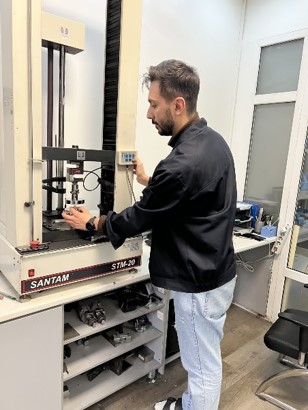
Plastics and ebonite – Determination of indentation hardness by means of a durometer (Shore hardness)
Purpose: The determination of the indentation hardness of plastics and ebonite by means of durometers of two types: type A is used for softer materials and type D for harder materials. The method permits measurement either of the initial indentation or of the indentation after a specified period of time, or both.
Standards:
ASTM D2240, ISO 868, ASTM 48-4, DIN 53505
Measured Properties
- 20 to 90 Shore A
- 20 to 90 Shore D

Rubber, vulcanized or thermoplastic – Determination of compression set
Purpose: Determination of water absorption in plastics to assess dimensional stability, material uniformity, and potential changes in mechanical and physical properties.
Capabilities
- At ambient or elevated temperatures to 300°C
- At low temperatures to -40°C
Standards
ASTM D395, ISO 815-1 & 2, ASTM D1055, DIN 53517
Measured Properties
- Compression Set(%)
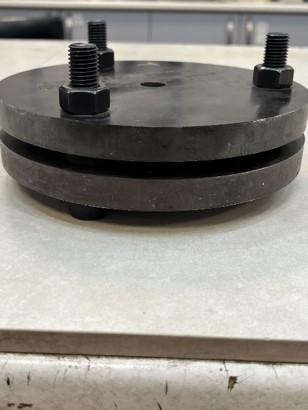
Rubber Property -Adhesion to Rigid Substrates
Purpose: Determination of the adhesion of rubber to metals, rigid plastics, or other non-elastic substrates.
Standards
ASTM D429, ISO 2411, ISO 11339
Measured Properties
- The force required to detach the rubber from the substrate (metal, rigid plastic, or other non-elastic surfaces). Typical units: N/mm or kP
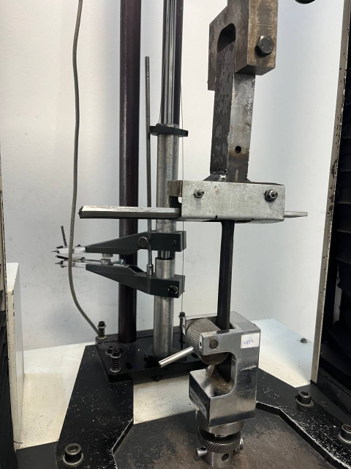
Adhesives – Determination of tensile lap-shear strength of rigid-to-rigid bonded assemblies
Purpose: Determining the tensile lap-shear strength of rigid-to-rigid bonded assemblies using a standard specimen under specified conditions of preparation and testing
Standards
ASTM D1002, ISO 4587
Measured Properties
- The force required to break the adhesive bond between two rigid substrates (metal, engineering plastic, etc.). Typical units: MPa or N/mm²
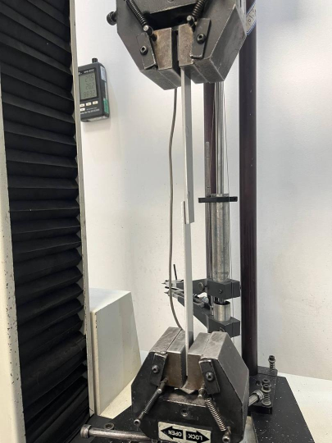
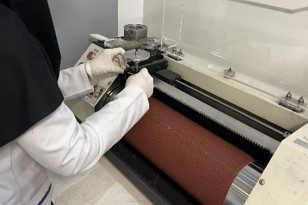
Rubber, vulcanized or thermoplastic – Determination of abrasion resistance using a rotating cylindrical drum device
Purpose: Determination of rubber resistance to abrasion using a rotating cylindrical drum apparatus.
Standards
ASTM D5963, ISO 4649, DIN 53516
Measured Properties
Volume loss of the rubber after abrasion testing using a rotating cylindrical drum.
Typical units: mm³ or cm³.
Abrasion Resistance Index / Relative Volume Loss:
The ratio of the specimen’s volume loss to that of a reference or standard sample.
Typical units: dimensionless (index)
Rubber, vulcanized or thermoplastic – Determination of tear strength
Purpose: Determination of tear resistance of vulcanized or thermoplastic rubber.
Standards: ASTM D624, ISO 34, DIN 53515, ASTM D1004, ASTM D1938
Measured Properties
- The force required to initiate or propagate a tear in the specimen.
Typical units: N/mm or KN/m
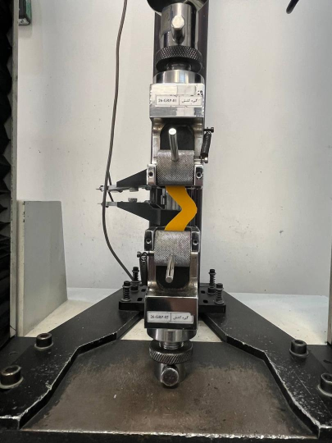
Tensile Strength of Butt-Fused joint Polyethylene Pipes
Purpose: Assessment of the quality and integrity of butt-fused polyethylene pipe joints by measuring the tensile strength of the weld.
Standard: ISO 13953
Measured Properties
- Tensile Strength of the Weld:
The maximum force that the butt-fused pipe joint can withstand before failure.
Units: MPa or N/mm² - Failure Mode:
Location and manner of specimen failure: in the weld zone, in the pipe body, or at the weld/pipe interface.
Critical information for evaluating weld quality and joint integrity. - Elongation at Break / Strain at Failure:
The amount of elongation or deformation of the specimen up to the point of failure.
Units: %