

Materials science relies on understanding the relationships between composition, microstructure, processing, and performance. FE-SEM and EDS provide powerful tools for investigating materials at the micro- and nanoscale, enabling detailed characterization of structural features, defects, interfaces, and elemental composition.
The following areas represent key applications of electron microscopy in materials science and engineering.
- Metals & Alloys
Investigation of grain structures, phases, inclusions, precipitates, welds, and fracture surfaces to evaluate processing effects, material properties, and performance.
- Polymers & Composites
Characterization of polymer morphology, filler dispersion, fiber–matrix interfaces, porosity, and fracture mechanisms to support materials development and performance evaluation.
- Ceramic & Glasses
Analysis of microstructure, porosity, grain boundaries, sintering behavior, and compositional variations in structural and functional ceramic materials.
- Coatings & Surface Engineering
Evaluation of coating thickness, adhesion, morphology, defects, wear behavior, and corrosion protection performance in engineered surfaces.
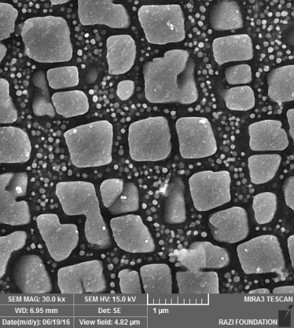
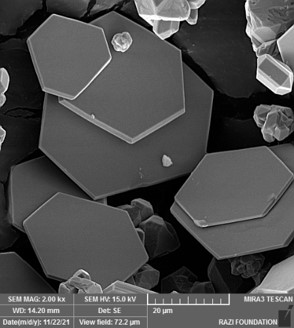
- Nanomaterials
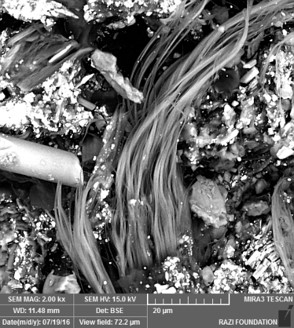
Characterization of nanoparticles, nanofibers, nanotubes, thin films, and other nanostructured materials, including morphology, size distribution, and elemental composition.
- Advanced Functional Materials
Investigation of materials used in energy, electronics, catalysis, sensors, and emerging technologies, with emphasis on microstructure–property relationships and performance optimization.
- Failure Analysis & Materials Degradation
Building on the advanced capabilities of the FE-SEM facility, the laboratory provides industry-oriented analytical services with a strong emphasis on failure analysis and root-cause investigations, while also supporting a wide range of SEM-based research case studies.
SEM-based analyses are performed on real components and materials to support technical decision-making, quality improvement, process optimization, and the investigation of failure, degradation mechanisms, and root causes of service-related phenomena across multiple industrial sectors.
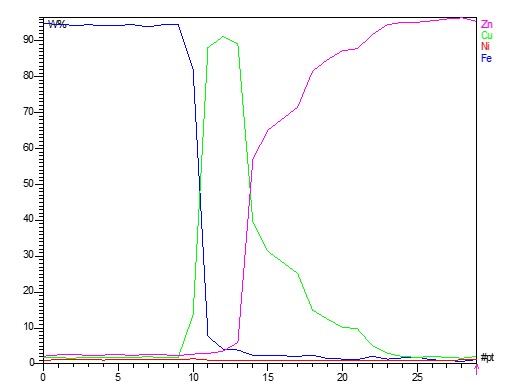
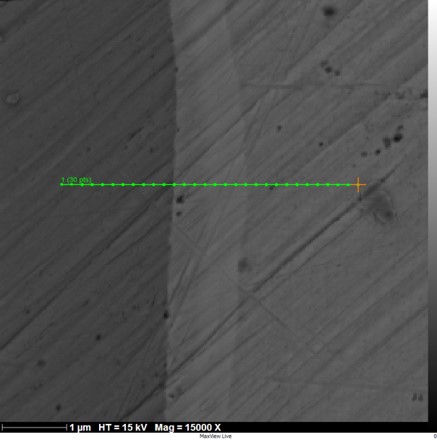
In addition to fractographic analysis, SEM combined with EDS elemental analysis is used to identify material defects, inclusions, contamination, corrosion products, and service-induced chemical changes. Line scan and elemental mapping techniques provide spatial distribution of critical elements, supporting the identification of mechanisms such as stress corrosion cracking, hydrogen-related damage, oxidation, sulfidation, and erosion–corrosion.
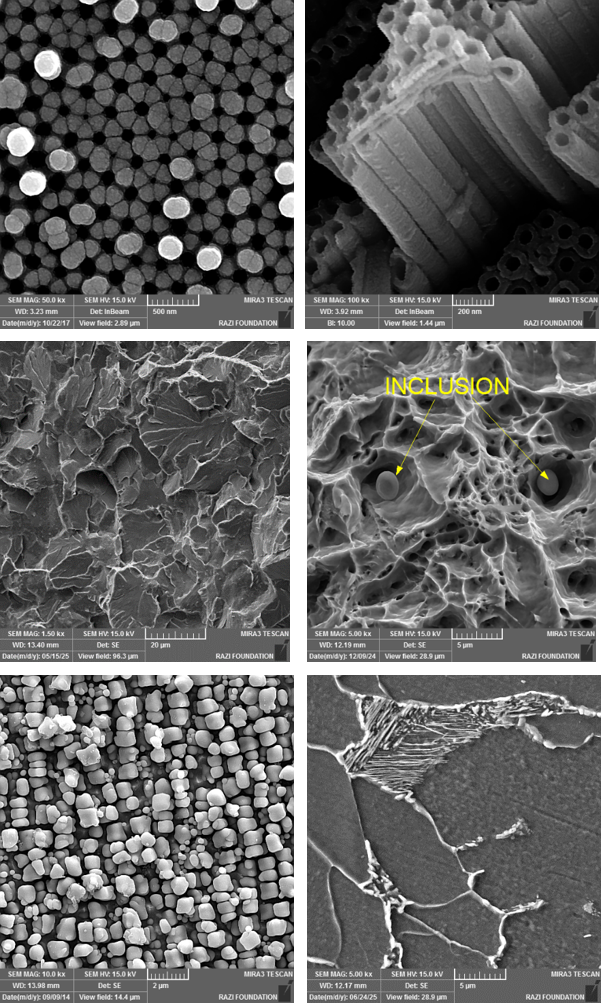
These SEM-based investigations support failure analysis of industrial components, welds, coatings, fasteners, pipelines, and structural parts, contributing to corrective actions, process improvement, material selection, residual life assessment and prevention of recurring failures in operating systems.