Internationally Compliant Mechanical Testing Facility
RMS Lab Group provides state-of-the-art analytical services for heavy industry and advanced engineering. Our facility is equipped with precision instruments to ensure absolute reliability and technical authority in every evaluation
Tensile & Hot Tensile Testing
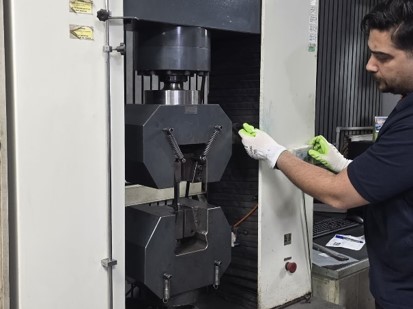
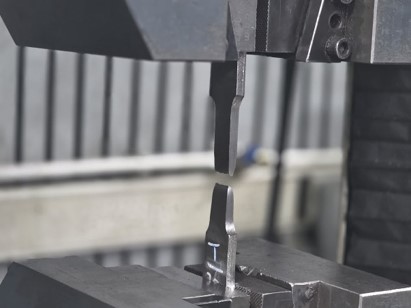
Purpose: Assessment of metallic material performance under controlled uniaxial tensile loading.
The procedure determines essential mechanical properties including yield strength, 0.2% proof strength, ultimate tensile strength (UTS), and ductility characteristics. Testing is carried out using four calibrated universal machines with capacities from 100 kN to 1000 kN, ensuring accurate and standards-compliant evaluation across a broad range of materials and specimen configurations.
Standards:
ASTM A370, ASTM E8/E8M , ASTM B557, ASTM E21, ASTM F606, AWS B4.0, AWS D1.1, API 1104, ASME SEC. IX, BS EN ISO 6892-1, BS EN ISO 6892-2, BS EN ISO 898-1, ISO 4136, ISO 3506-1, JIS B 1054, DNV-OS-F101
Measured Properties:
- Yield tensile strength (YS)
- Ultimate tensile strength (UTS)
- Elongation
- Reduction of area
- Ductility
- Elastic modulus
Internationally Compliant Mechanical Testing Facility
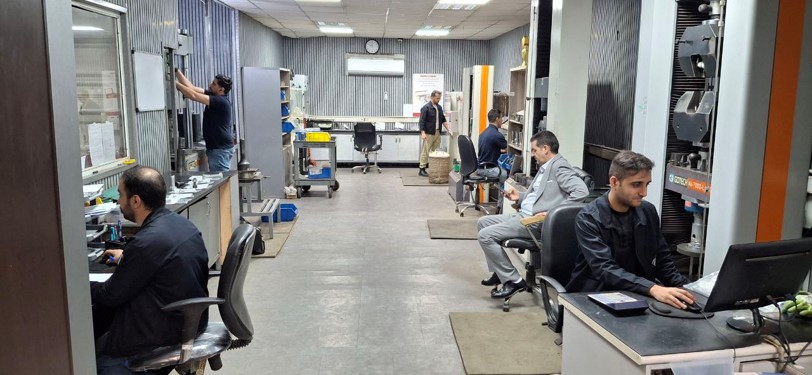
The Mechanical Testing Laboratory is a fully equipped, internationally benchmarked facility providing mechanical characterization of engineering materials and components.
The laboratory is designed to meet the stringent requirements of globally operating industries, including oil & gas, energy, construction, aerospace, automotive, and advanced manufacturing.
The laboratory provides a broad spectrum of mechanical tests that establish fundamental and application-specific properties of engineering materials, structural components, welded joints, and advanced alloys. These tests support design verification, failure investigation, quality control, material qualification, and research and development.
All tests are performed in accordance with International standards, under controlled conditions, using calibrated equipment and qualified personnel, ensuring accuracy, repeatability, traceability, and global acceptance of results.
Hot Tensile Test
Purpose: To determine the mechanical properties of materials at elevated temperatures by evaluating parameters such as yield strength, tensile strength, and ductility under conditions that simulate actual high-temperature service environments. The testing system is capable of operating at temperatures up to 1000 °C and provides graphical output of the test results.
Standards:
ASTM E21
Measured Properties:
- Yield tensile strength (YS)
- Ultimate tensile strength (UTS)
- Elongation
- Reduction of area
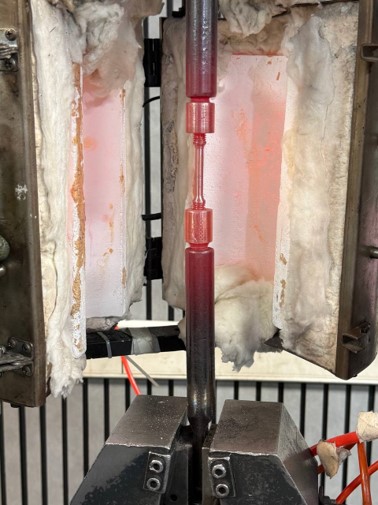
Creep & Stress Rupture Test
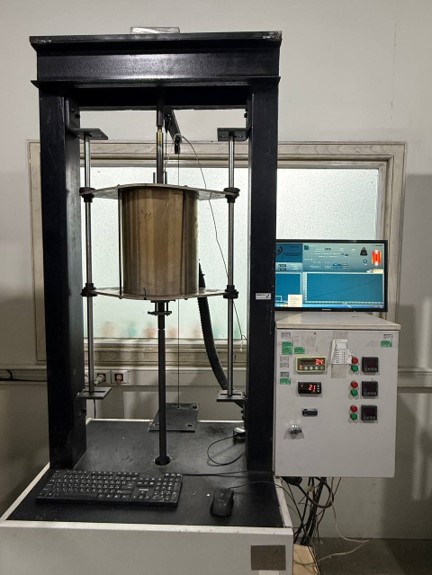
The creep test is conducted to evaluate the long-term deformation behavior of materials subjected to constant load at elevated temperatures. It determines creep rate, the different creep stages (primary, secondary, and tertiary), time to rupture, and rupture strength. Testing is performed at controlled temperatures up to 1100 °C, and the system provides continuous graphical output in the form of strain–time curves for analyzing creep behavior and predicting material lifetime in high-temperature, load-bearing applications.
The stress rupture test evaluates the time-dependent fracture behavior of materials under constant tensile load at elevated temperatures. A uniaxial stress is applied and maintained at a specified temperature until rupture occurs, allowing determination of the time to rupture under defined stress–temperature conditions. This test is essential for material selection, component design, and life assessment of high-temperature equipment such as boiler tubes, steam headers, pressure vessels, and turbine components, and is widely used in power generation, petrochemical, and oil & gas industries
Standard:
ASTM E139
Rotating Bending Fatigue Test
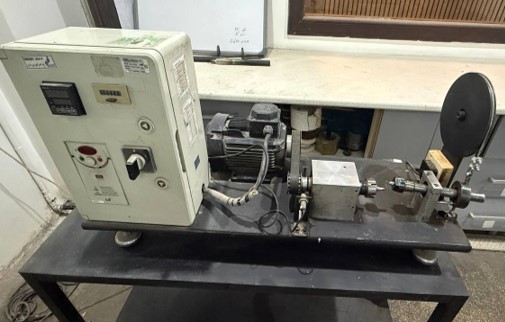
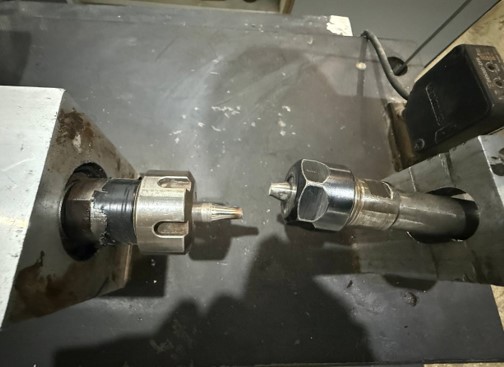
The rotary bending fatigue test evaluates the fatigue behavior of materials under cyclic bending stress. A rotating specimen is subjected to a constant bending moment, generating alternating tensile and compressive stresses. The test is used to determine fatigue life, endurance limit, and S–N curves, and is widely applied for durability assessment and design validation of rotating components such as shafts, axles, springs, and transmission parts.
Standard:
ISO 1143
Charpy Impact Test
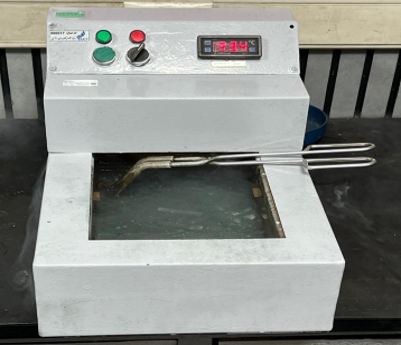
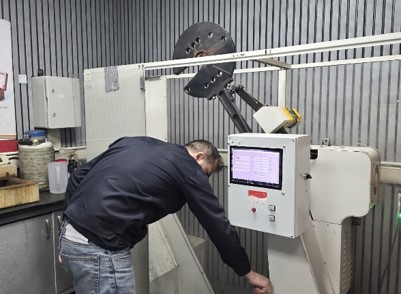
Purpose: To determine the impact toughness of materials over a temperature range from –196 °C to 500 °C using Charpy V-notch (CVN) and Charpy U-notch (CUN) methods in accordance with EN and ASTM standards. Testing is performed on two calibrated impact machines, ensuring accurate and reliable results
The V-notch test is primarily used to evaluate fracture toughness and ductile-to-brittle transition behavior under severe stress concentration, while the U-notch method is applied where specified by certain material standards or project requirements.
Cryogenic testing down to –196 °C is essential for LNG, offshore, and low-temperature service applications to prevent brittle failure, whereas high-temperature impact testing up to 500 °C supports material qualification for power generation, refinery, and other high-temperature industrial components.
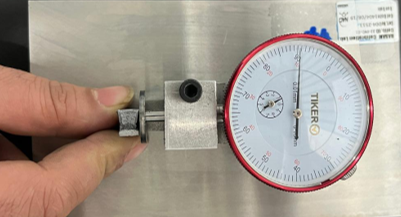
Lateral expansion (LE) of Charpy V-notch specimens is determined following impact fracture as a quantitative measure of plastic deformation capacity at the notch root and an indirect indicator of fracture mode (ductile versus brittle behavior). The measurement is performed using a dedicated lateral expansion gauge in accordance with ASTM E23 .
Standards:
ASTM A370, ASTM E23, EN 875, ISO 148-1, ISO 9016
Bend Test
Purpose: Assessment of ductility and integrity under bending deformation.
Standards:
ASME SEC. IX, API 1104, ASTM E290, ASTM E190, ASTM A370, JIS Z 2248, ISO 5173
Wedge Testing for Fasteners
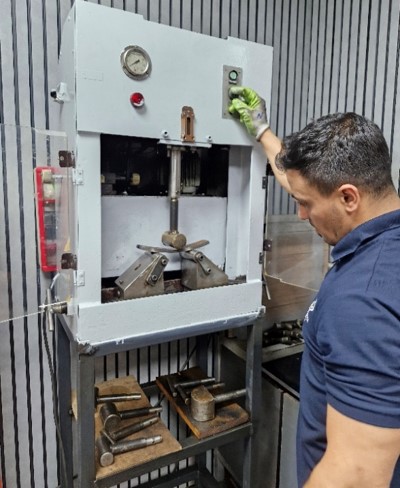
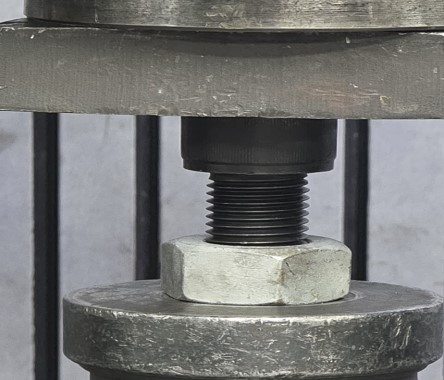
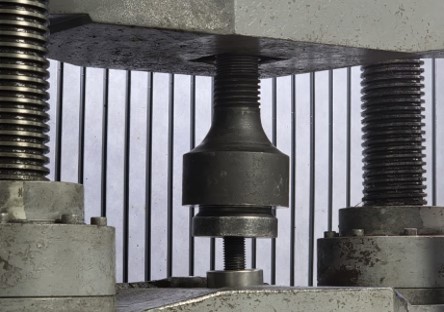
Purpose: Wedge testing is used to evaluate the fracture toughness and crack propagation resistance of materials.
Standards:
ASTM F606, ASTM F3125, BS EN ISO 898-1
Proof Testing for Fasteners
Purpose: Proof testing for fasteners is carried out to confirm that the fastener can withstand its specified proof load without permanent deformation or failure.
Standards:
ASTM F606, BS EN ISO 898-1, BS EN ISO 898-2, ASTM A194
Flare & Flange Test
Purpose: Flare and flange testing is performed to verify the strength, integrity, and leak-tightness of flared and flanged tubes under specified mechanical or pressure loads.
Standards:
ASTM A450, ASTM A1016, ASTM A999, EN ISO 8493
Flattening Test
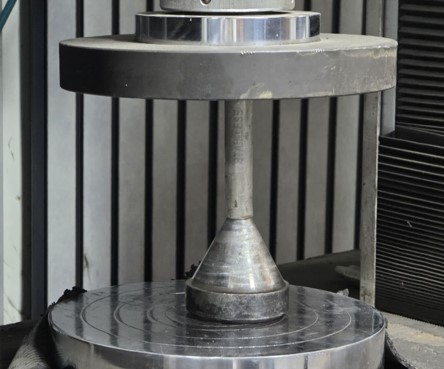
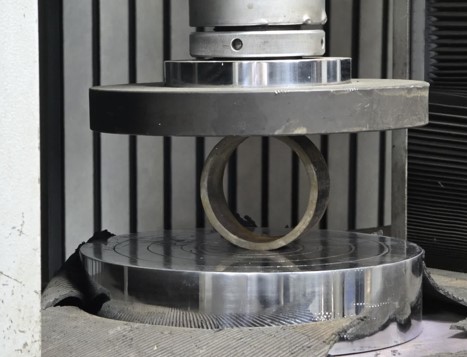
Purpose: Flattening testing is performed to assess the ductility and soundness of tubes or pipes by evaluating their ability to withstand deformation without cracking or failure.
Standards:
ASTM A450, ASTM A1016, ASTM A999, EN ISO 8492, API 5L
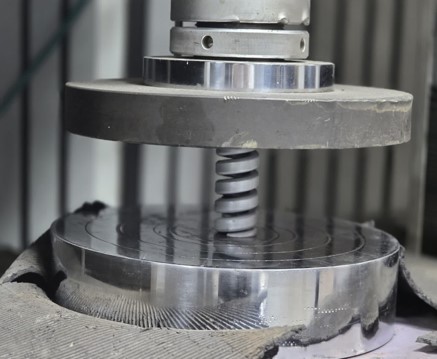
Spring Coefficient
Purpose: Spring coefficient testing is performed to determine the stiffness of a spring by measuring the relationship between applied load and resulting deflection.
Standards:
JIS B2707, EN ISO 22705‑1
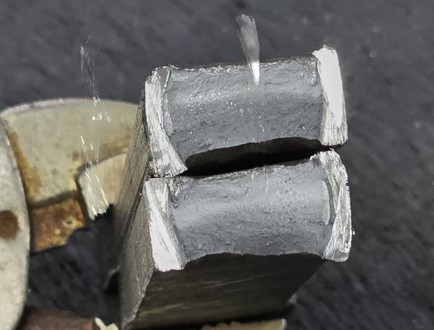
Nick Break
Purpose: Nick break testing is a destructive test in which a small notch is introduced in a welded or metallic specimen, which is then broken to expose the internal structure and reveal any hidden cracks, voids, or defects.
Standards:
API 1104
With its comprehensive testing scope in accordance with international standards, advanced infrastructure, and rigorous quality assurance system, the Mechanical Testing Laboratory delivers results of the highest technical reliability. It stands as a trusted partner for material qualification, performance validation, and engineering decision-making worldwide.
Fastener performance plays a critical role in the safety and reliability of engineered systems, and visual similarity alone is never a guarantee of identical behavior. Element’s fastener testing services are designed to uncover the true mechanical performance of screws, bolts, and fastening components under real-world conditions.
Through comprehensive testing, we evaluate key performance characteristics such as strength, durability, and functional reliability to support regulatory compliance and reduce risk in critical applications. Our proven expertise delivers accurate, trusted data that enables informed decision-making, validates component integrity, and supports innovation across demanding industries.
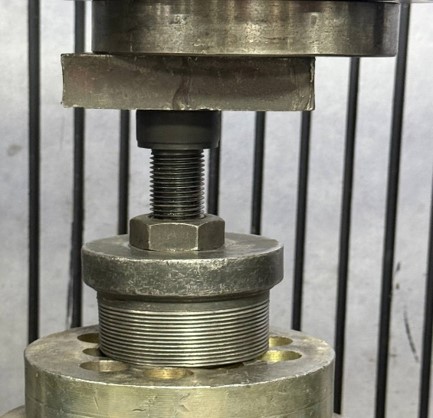
Wedge & Tensile Test
Measures the ultimate tensile strength, yield strength, and elongation of bolts and screws. Determines the material’s behavior under axial loading.
Standards:
BS EN ISO 898-1, BS EN 14399-3&4, ASTM F3125, ASTM A193, ASTM A320, ASTM A325, ASTM A490, ISO 3506-1
Torsion Test
Evaluates the torque capacity and rotational strength of fasteners and Identifies the tightening torque required for secure joint assembly.
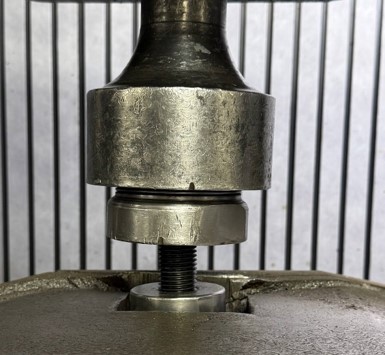
Proof Load Test
Measures thread strength and thread engagement quality. Ensures reliable fastening in critical applications.
Standards:
BS EN ISO 898-1&2, BS EN 14399-3&4, ASTM F3125, ASTM A194, ASTM A325, ASTM A490, ISO 3506-2
Impact Testing
Evaluates toughness and resistance to sudden loading or shock. Important for high-impact or dynamic load environments.
We ensure that every fastener is tested for mechanical reliability, helping our clients achieve optimal performance and safe.
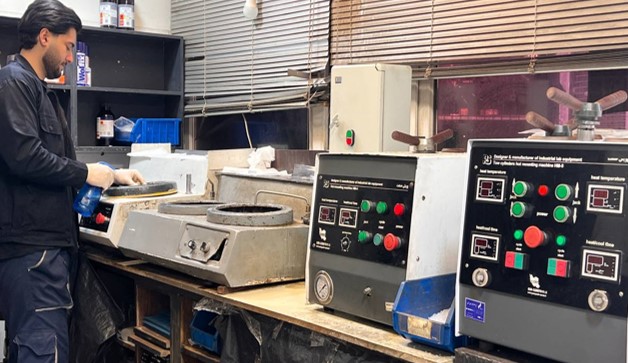
Sample Preparation Machine Shop
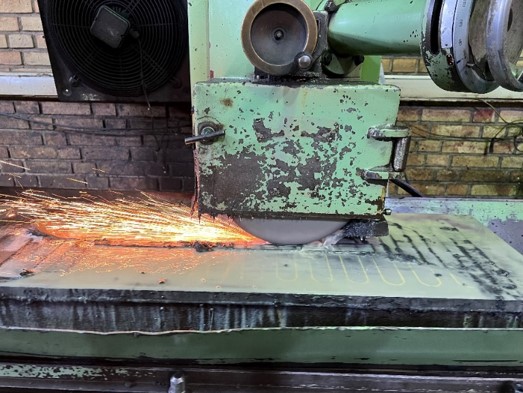
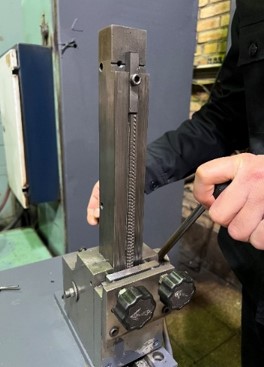
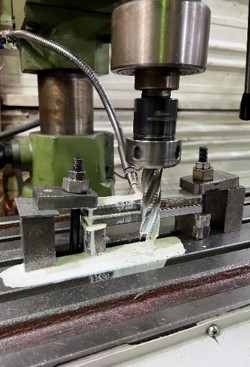
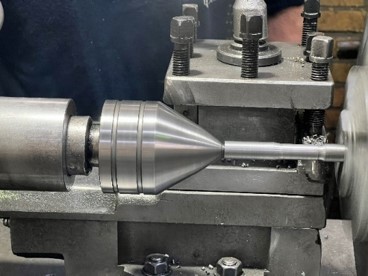
In our Sample Preparation Unit, cutting, grinding, and machining operations for mechanical test specimens are carried out with high precision and strict adherence to relevant standards. After primary cutting, specimens are machined to achieve the exact dimensions and geometries required for tensile, bending, fatigue, and impact testing. Surface grinding using magnetic grinding machines ensures tight dimensional tolerances, smooth finishes, and proper parallelism, providing specimens that fully comply with BS EN, ASTM, and other applicable testing standards.
Metallographic Sectioning and Sample Preparation
For metallographic evaluation, specimens must first be carefully sectioned to isolate the region of interest and to facilitate proper handling during subsequent preparation stages. The selection of the cutting method depends on the material type and its properties. Metallic materials and metal matrix composites are typically separated using abrasive cutting techniques, while brittle materials require precision cutting with diamond wafer blades.
Careful control of the sectioning process is essential to prevent microstructural alteration or surface damage that could lead to inaccurate metallographic interpretation.