
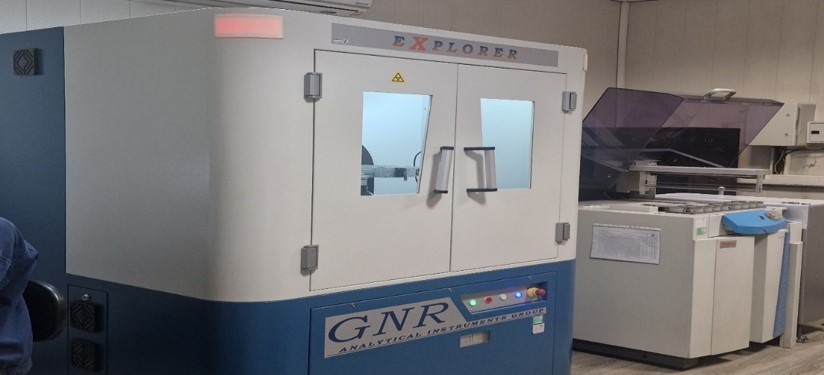
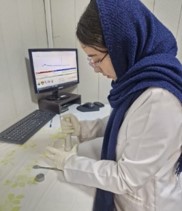
The Mineral Laboratory has been equipped with the latest ARL XRF instruments, which are capable of performing both qualitative and quantitative elemental analysis. Due to the short testing time and the absence of chemical reagents, XRF offers significant advantages compared to other chemical analysis methods for mineral composition. With the ability to measure elements from sodium (Na) to uranium (U), this instrument can be used for the analysis of mineral, geological, rock, glass, cement, ceramic, and metallic alloy sampels. XRD analysis allows for the identification of crystalline phases and detailed study of mineral structures by generating diffraction patterns of the sample. XRD has broad applications in geology, materials science, environmental science, chemistry, physics, metallurgy, and related fields.
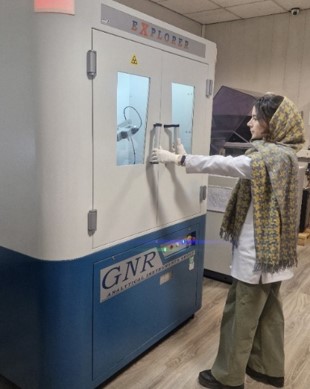
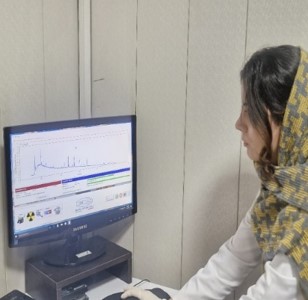
XRD Instrument (X-ray Diffractometer)
X-ray diffraction (XRD) is a rapid analytical technique used to identify the phases of crystalline materials.
XRD (X-ray Diffraction) is one of the most widely used analytical methods for identifying compounds and phases present in materials and is considered part of spectroscopic and crystallographic analysis techniques. X-rays with short wavelengths are scattered by a material when the wavelength is comparable to the spacing between atoms. As a result, the atomic and crystallographic structures of the material can be investigated.
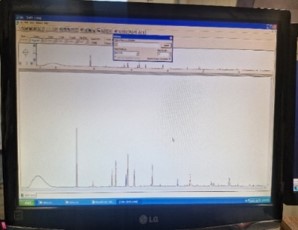
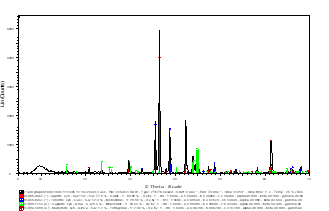
By analyzing the XRD output spectra, commonly referred to as X-ray diffraction patterns, it is possible to study the crystal structure, crystallite size, interatomic spacing, lattice parameters, and crystallographic defects.
Applications of XRD
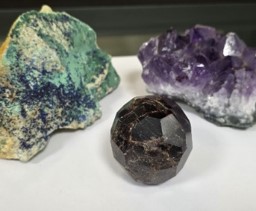
X-ray diffraction is primarily used to identify unknown crystalline materials, such as minerals and inorganic compounds. The identification of unknown solid materials has significant importance in geological, environmental, materials science, engineering, and biological studies.
In addition, XRD is used for the following purposes:
- Measurement of material purity
- Identification of fine-grained minerals such as clays and mixed-phase particles
- Determination of unit cell dimensions
- Characterization of crystalline material properties
- Advanced XRD techniques can also be applied in the following areas:
- Determination of crystal structure using the Rietveld refinement method
- Quantitative phase analysis
- Estimation of particle (crystallite) size using the Scherrer equation
- Characterization of thin film properties
- Determination of lattice mismatch between thin films and substrates
- Measurement of film thickness, roughness, and density using X-ray reflectivity (XRR)
- Texture analysis, such as determination of grain orientation in polycrystalline samples