


XRF
RMS Lab Group provides state-of-the-art analytical services for heavy industry and advanced engineering. Our facility is equipped with precision instruments to ensure absolute reliability and technical authority in every evaluation
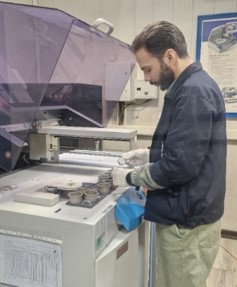
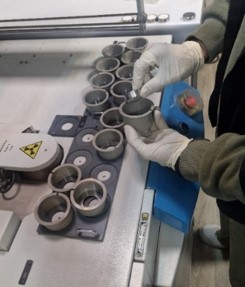
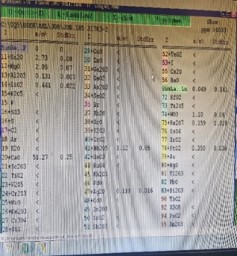
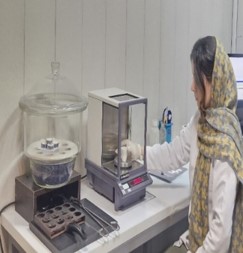
XRF Instrument (X-ray Fluorescence Spectrometer)
The XRF (X-ray Fluorescence) instrument is one of the most common material analysis techniques and is capable of identifying the elemental composition of a material both qualitatively and quantitatively without causing destructive effects on
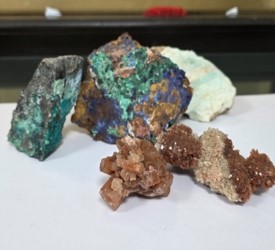
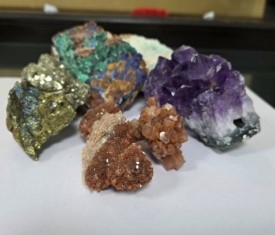
The operating principle of XRF, similar to XRD, is based on X-ray irradiation; however, there are fundamental differences in the detection mechanism. XRF is widely used for the analysis of a broad range of materials, including various rocks, minerals, sediments, and related samples.
In XRF analysis, the type and concentration of elements are determined by measuring the secondary X-ray fluorescence emitted as a result of excitation by primary X-rays. Each element emits characteristic fluorescence radiation that serves as its unique fingerprint. For this reason, XRF spectrometry is considered an ideal and practical technique for elemental composition analysis.
Advantages of XRF
XRF is capable of qualitative and quantitative analysis of a wide range of elements, from sodium (Na) to uranium (U).
Compared to conventional analytical methods such as titration, XRF offers higher speed and accuracy but lower cost.
It is ideal for analyzing elements such as silicon (Si), titanium (Ti), aluminum (Al), iron (Fe), manganese (Mn), magnesium (Mg), sodium (Na), calcium (Ca), potassium (K), and phosphorus (P) in rock and sediment samples.
It is suitable for trace element analysis, including barium (Ba), zinc (Zn), zirconium (Zr), cerium (Ce), cobalt (Co), chromium (Cr), scandium (Sc), strontium (Sr), rhodium (Rh), uranium (U), vanadium (V), nickel (Ni), rubidium (Rb), yttrium (Y), lanthanum (La), and niobium (Nb) in rock and sediment samples. The detection limit for trace elements is typically in the order of a few parts per million (ppm).
Applications of XRF
XRF has a wide range of applications, including:
- Research on igneous and sedimentary rocks
- Soil Investigations
- Mining (e.g., determination of elemental composition in ores)
- Cement production
- Ceramic and glass manufacturing
- Metallurgy
- Environmental studies (e.g., analysis of specific substances in air filters)
- Petroleum industry (e.g., determination of sulfur content in crude oil and petrochemical products)
- Field investigations in geology and environmental studies (using portable XRF instruments)
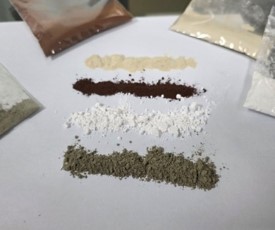
In most cases, for the analysis of rocks, minerals, sediments, and ores, solid samples are first ground into powder form to facilitate analysis. However, for samples containing high concentrations of certain elements or with large particle sizes, deviations from standard conditions may occur. To overcome this issue, samples are typically mixed with a chemical flux and melted in a furnace. This process produces a more homogeneous and diluted sample that can be analyzed more accurately.