
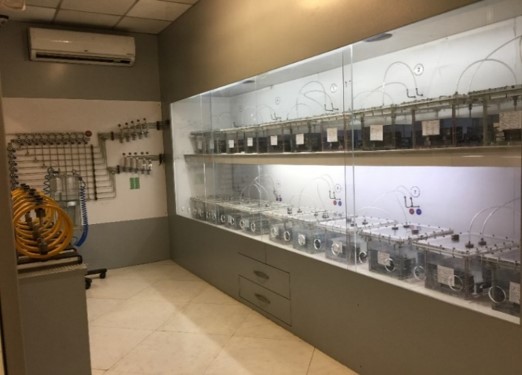
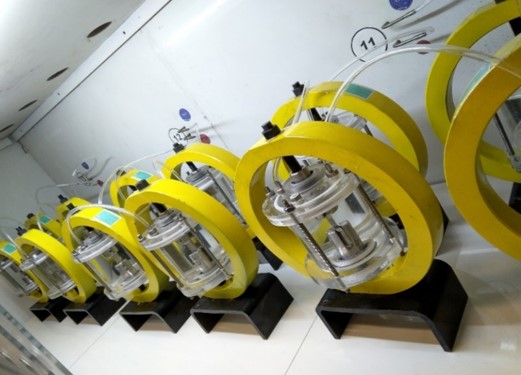
Internationally compliant Corrosion testing facility
The Corrosion Testing Laboratory is a specialized, internationally aligned facility dedicated to evaluating the corrosion behavior, environmental durability, and coating performance of metallic and non-metallic materials. The laboratory supports industries such as oil & gas, petrochemical, energy, marine, infrastructure, aerospace, and manufacturing by providing reliable data for material selection, qualification, failure analysis, and product validation.
The laboratory performs a comprehensive range of corrosion and degradation tests under controlled environmental and electrochemical conditions. Capabilities include sour service cracking tests (HIC, SSC, SCC), intergranular corrosion, pitting and crevice corrosion, salt spray exposure, dezincification, exfoliation corrosion, cathodic disbondment, passivation verification, and advanced electrochemical measurements such as polarization and EIS. In addition, the lab conducts coating performance evaluations including adhesion, flexibility, hardness, and disbondment testing.
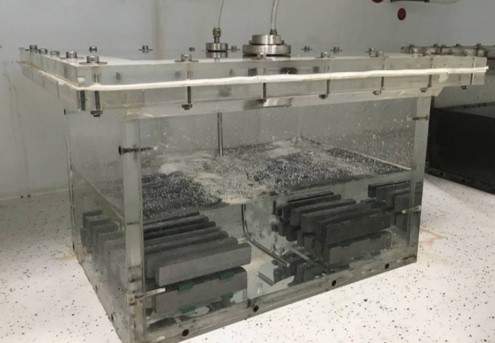
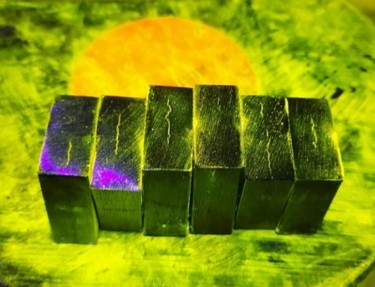
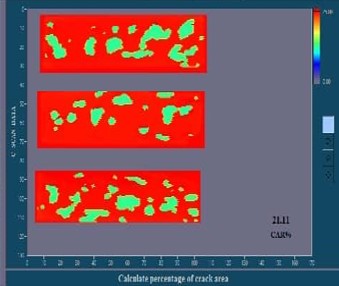
Hydrogen Induced Cracking (HIC)
Purpose: Evaluation of the susceptibility of carbon and low-alloy steels to Hydrogen Induced Cracking (HIC) in hydrogen sulfide (H₂S)–containing sour service environments.
Atomic hydrogen, formed in the presence of water and H₂S, penetrates the steel and accumulates at microstructural discontinuities, where it recombines into molecular hydrogen. The resulting internal pressure generates localized subsurface cracks, known as HIC.
Under certain stress and material conditions, these cracks can develop in a linear or stepwise pattern, or form a ladder-like arrangement referred to as Stress-Oriented Hydrogen Induced Cracking (SOHIC), often occurring in the low-hardness Heat Affected Zone (HAZ) of welds.
HIC and SOHIC testing exposes specimens to controlled sour environments, monitors crack initiation and propagation, and evaluates susceptibility using standardized metrics.
Standards:
NACE MR0175,NACE TM0284
Measured Properties:
- Evaluation of the absence of the Hydrogen Induced Cracking (HIC)
- Calculation of the Crack Sensitivity Ratio (CSR)
- Calculation of the Crack Thickness Ratio (CTR)
- Calculation of the Crack Length Ratio (CLR)
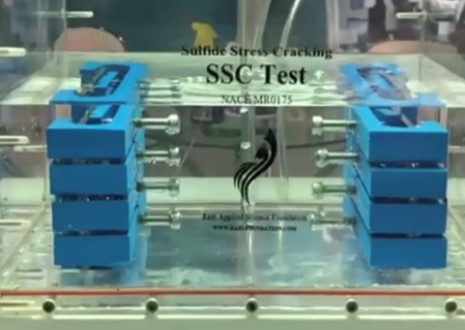
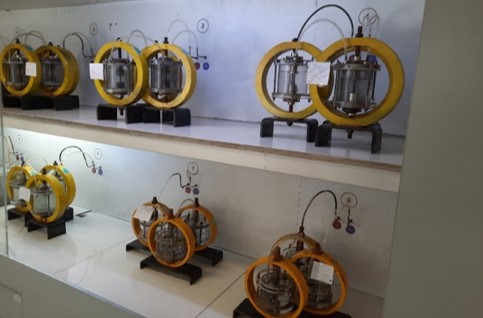
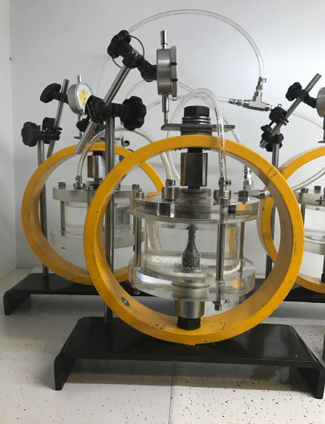
Sulfide Stress Corrosion Cracking & Stress Corrosion Cracking (SCC/SSCC)
Purpose: To evaluate the susceptibility of metallic materials, to cracking under applied or residual stress when exposed to corrosive environments containing hydrogen sulfide (H₂S), thereby verifying material suitability for sour service conditions and ensuring safe, reliable operation.
Standards:
NACE MR0175, NACE TM0177, NACE TM0316
Measured Properties:
- Evaluation of the absence of sulfide stress cracking
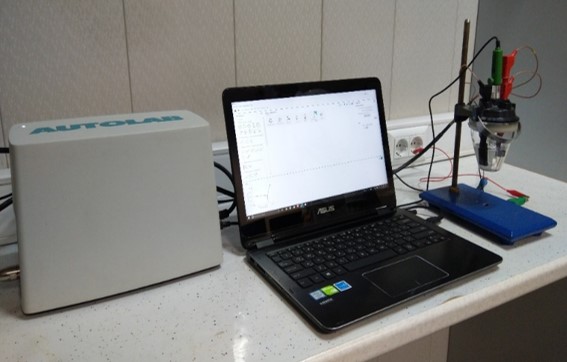
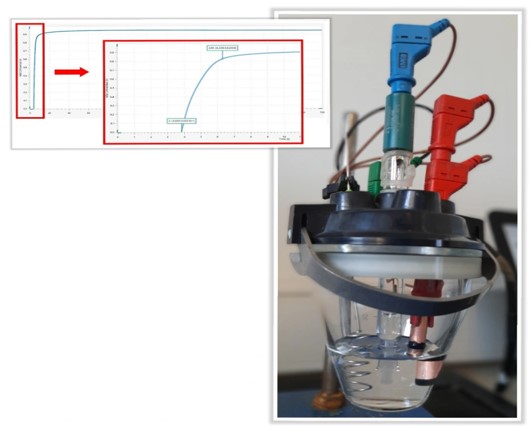
Electrochemical Corrosion Test (Polarization, EIS, Noise , …)
Purpose: These tests assess the corrosion behavior and kinetics of materials by electrochemical techniques such as polarization measurements, electrochemical impedance spectroscopy (EIS), and electrochemical noise analysis to determine corrosion rates, mechanisms, and protective properties of coatings or passive films.
Standards:
ASTM G31,ASTM G5
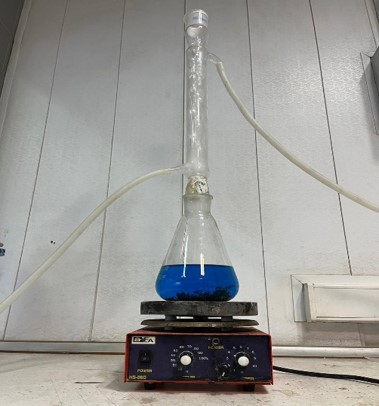
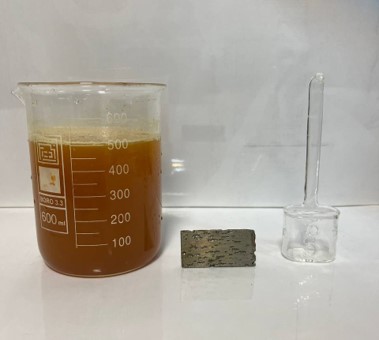
Intergranular Attack in Austenitic Stainless Steels
Purpose: The practice describes the procedure to determine the susceptibility of austenitic stainless steels to Intergranular attack.
Standards:
ASTM A262, ISO 3651
Detecting Susceptibility to Intergranular Corrosion in Wrought, Nickel-Rich, Chromium-Bearing Alloys
Purpose: The purpose of this test method is to detect susceptibility to intergranular corrosion in wrought, nickel-rich, chromium-bearing alloys as influenced by variations in processing, composition, or both.
Standard:
ASTM G28
Pitting and Crevice Corrosion Resistance of Stainless Steels and Related Alloys
Purpose: The test methods cover procedures for the determination of the resistance of stainless steels and related alloys to pitting and crevice corrosion when exposed to oxidizing chloride environments.
Standard:
ASTM G48
Visual Assessment of Exfoliation Corrosion Susceptibility of 5XXX Series Aluminum Alloys
Purpose: This test method provides a reliable prediction of the exfoliation corrosion behavior of Al-Mg alloys in marine environments. The test is useful for alloy development studies and quality control of mill products such as sheet and plate.
Standard:
ASTM G66
The Susceptibility to Intergranular Corrosion of 5XXX Series Aluminum Alloys
Purpose: This test method covers a procedure for constant immersion intergranular corrosion testing of 5XXX series aluminum alloys.
Standard:
ASTM G67
Stainless Steel passivation verification test
Purpose: The tests in this specification are qualitative tests intended to confirm the effectiveness of passivation.
Standard:
ASTM A967
Detection, Testing, and Evaluation of Microbiologically Influenced Corrosion on Internal Surfaces of Pipelines
test method applies to the internal surfaces of pipelines, and describes types of microorganisms, mechanisms by which MIC occurs, methods for sampling and testing for the presence of microorganisms, research results, and interpretation of test results
Standard:
NACE TM0212
Determination of Dezincification Resistance of Copper Alloys with Zinc
Purpose: This part of ISO 6509 specifies a method for the determination of dezincification depth of copper alloys with zinc exposed to fresh, saline waters or drinking water. The method is intended for copper alloys with a mass fraction of zinc more than 15 %.
Standard:
ISO 6509-1
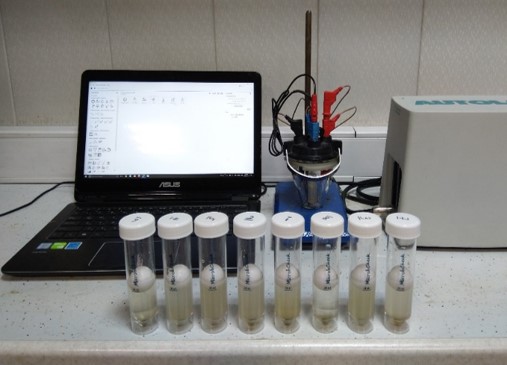
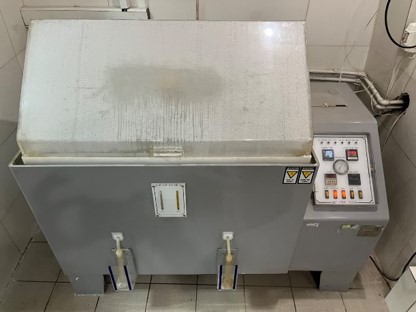
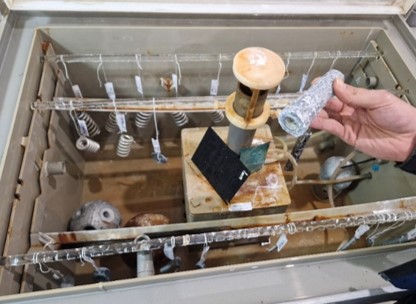
Salt Spray
Purpose: This practice provides a controlled corrosive environment which has been utilized to produce relative corrosion resistance information for specimens of metals and coated Metals exposed in a given test chamber.
Standards:
ASTM B117, ISO 9227
Residual Stresses in Wrought Copper
Purpose: This test method describes the technique for conducting the mercurous Nitrate test for residual stresses in wrought Copper alloy mill products.
Standard:
ASTM B154
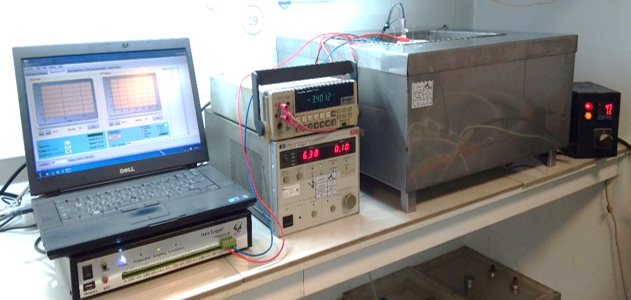
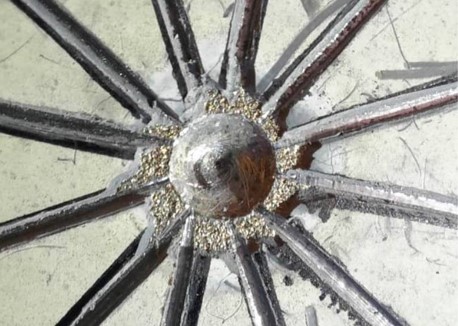
Cathodic Disbondment Test
Purpose: The test consists of assessing the resistance to disbondment of damage to the pipe line coatings when exposed to cathodic polarization.
Standards:
ISO 21809, ASTM G8
Qualitative Adhesion Testing of Metallic Coatings
Purpose: This practice covers simple, qualitative tests for evaluating the adhesion of metallic coatings on various substances.
Standard:
ASTM B571
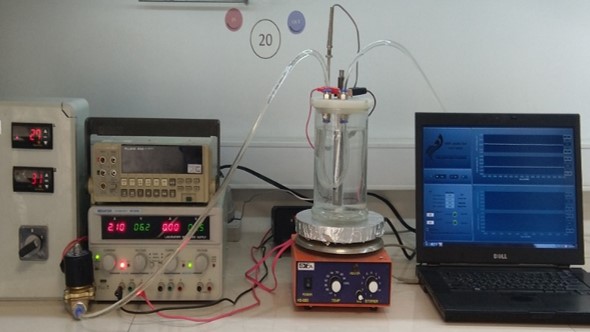
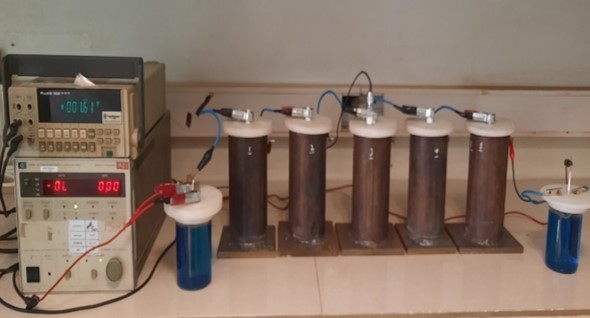
Testing of Catalyzed Titanium Anodes for Use in Soils or
Natural Waters
Accelerated testing of catalyzed titanium for use as CP
anodes in soils or natural waters is intended to provide an
indication of the anode’s ability to perform satisfactorily for a
specific number of years
Standard:
NACE TM0108
Laboratory Evaluation of Magnesium Sacrificial Anode Test
Specimens for Underground Applications
Purpose: This test method describes a laboratory procedure that
measures the two fundamental performance properties of
magnesium sacrificial anode test specimens operating in a
saturated calcium sulfate, saturated magnesium hydroxide
environment. The two fundamental properties are electrode
(oxidation potential) and ampere hours (Ah) obtained per unit
mass of specimen consumed.
Standard:
ASTM G97
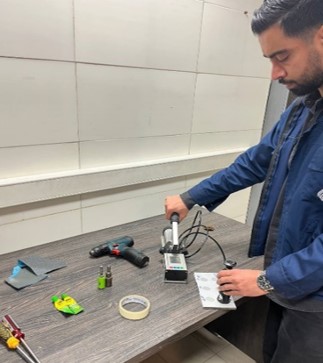
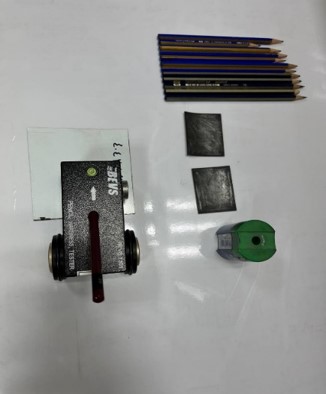
Pull-Off Strength of Coatings Using Portable Adhesion Testers
Purpose: This test method covers a procedure for evaluating the pull-off strength of a coating system from metal substrates.
Standards:
ASTM D4541,ISO 4624
Film Hardness by Pencil Test
Purpose: This test method covers a procedure for rapid, inexpensive determination of the film hardness of an organic coating on a metal or similarly hard substrate in terms of drawing leads or pencil leads of known hardness.
Standard:
ASTM D3363
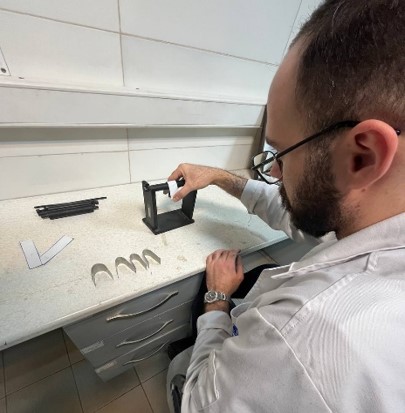
Mandrel Bend Test of Attached Organic Coatings
Purpose: These test methods cover the determination of the resistance to cracking (flexibility) of attached organic coatings on substrates of sheet metal or rubber-type materials.
Standard:
ASTM D522
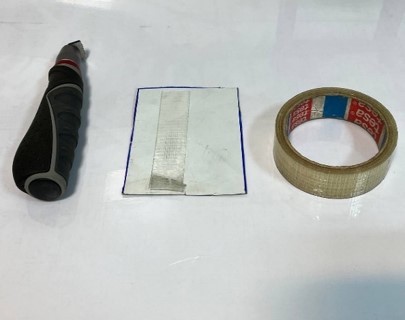
Rating Adhesion by Tape Test
Purpose: These test methods cover procedures for assessing the adhesion of relatively ductile coating films to metallic substrates by applying and removing pressure-sensitive tape over cuts made in the film.
Standards:
ASTM D3359,ISO 2409