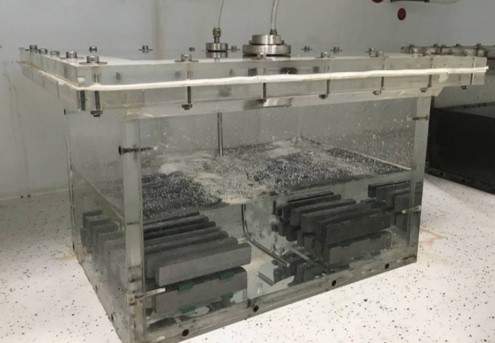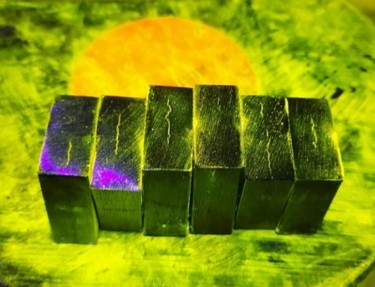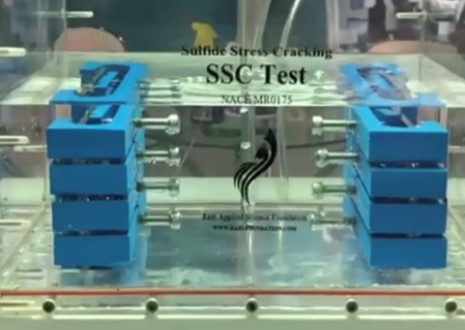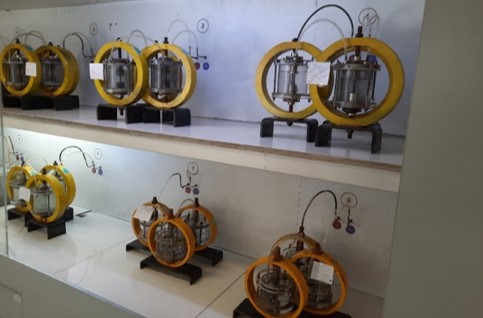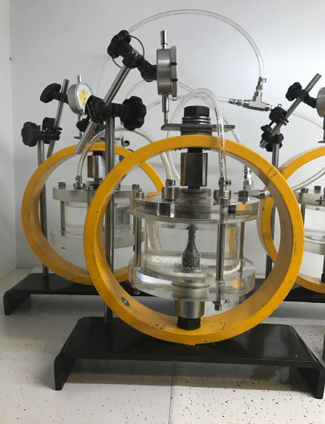


NACE corrosion testing is performed to evaluate the resistance of materials to hydrogen-related and sulfide-induced damage in sour service environments. The testing includes assessment of Hydrogen Induced Cracking (HIC), Sulfide Stress Cracking (SSC), and Stress-Oriented Hydrogen Induced Cracking (SOHIC) under controlled exposure conditions representative of H₂S-containing service environments.
In addition, hydrogen embrittlement susceptibility is evaluated to determine material performance under hydrogen charging conditions and applied stress.
These analyses are carried out in accordance with relevant NACE MR0175 / ISO 15156 requirements to assess material suitability for oil and gas applications, particularly in sour gas production and processing environments.
Measured Properties:
- Evaluation of the absence of the Hydrogen Induced Cracking (HIC)
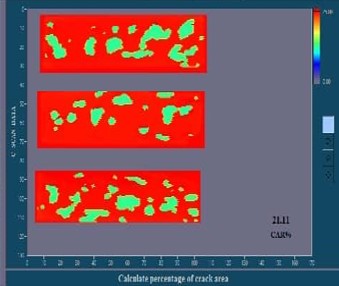
- Calculation of the Crack Sensitivity Ratio (CSR)
- Calculation of the Crack Thickness Ratio (CTR)
- Calculation of the Crack Length Ratio (CLR)
- Evaluation of the absence of sulfide stress cracking